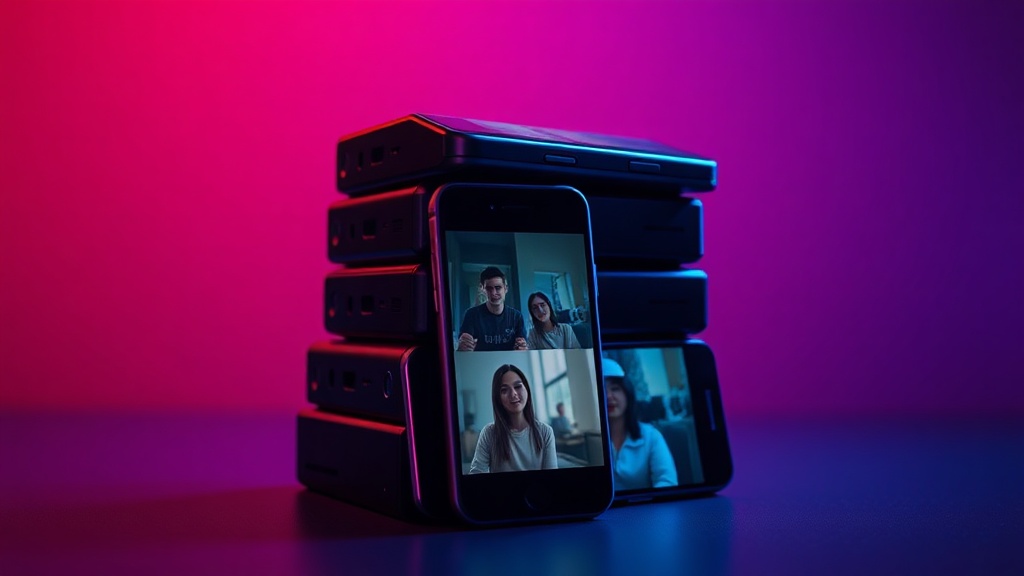
In April 2024, a Chinese app called ReelShort quietly became the #1 entertainment download on the US App Store — outranking Netflix, TikTok, and Disney+. Twelve months later, the micro-drama industry was worth over $5 billion globally, with 300+ apps competing for viewer attention across 80-second episodes structured like pure dopamine delivery. It's the fastest-growing video format in history, and most Western creators haven't noticed yet.
This is the explainer on what micro-drama actually is, why it exploded out of China, how each 60–90s episode is structured, and — most importantly — why AI narrative video generators are perfectly positioned to produce this content at scale.
What is a micro-drama?
A micro-drama (also called "vertical drama", "短剧" / "duanju" in Mandarin, or "mini-series verticales") is a serialized scripted show delivered in 60–120 second vertical episodes. A complete season runs 60–100 episodes, each ending on a cliffhanger. Viewers pay per-episode (usually $0.50–$1 after the first 10 free episodes) to unlock the next chunk.
The core innovation is simple: instead of asking viewers to commit to a 45-minute Netflix episode, they commit to 90 seconds. The hook-to-payoff loop fires every minute. Dopamine arrives at 4× the rate of traditional TV. Addiction rates are staggering — the average engaged viewer consumes 3.5 hours/day.
The canonical episode structure
Every micro-drama episode follows the same dopamine architecture. This is not creativity — this is mechanical engineering of emotional response:
- 0–3s: **Cold open hook** — a shocking event. "She slapped him in front of everyone."
- 3–15s: **Context setup** — who, where, what's at stake. Fast cuts, minimal dialogue.
- 15–45s: **Escalation** — the conflict deepens. Two new reveals per 30 seconds.
- 45–75s: **Emotional peak** — a kiss, a betrayal, a revenge moment.
- 75–90s: **Cliffhanger** — a new threat appears RIGHT before the episode ends.
- 90s: **Pay-to-continue** — "Unlock Episode 8 for $0.99"
The big 4 genres
- **Luxury revenge** — she was poor, now she's a billionaire heiress, everyone who wronged her gets destroyed
- **Werewolf/alpha billionaire romance** — supernatural + wealth + obsessive love
- **Reincarnation / time-travel** — modern woman wakes up in ancient palace, uses modern knowledge to win
- **Marriage deception** — contract marriage that becomes real, or long-lost husband returns with amnesia
The economics (it's wild)
Traditional TV episode: $2M budget, 22 minutes. Cost per second: $1,515.
Micro-drama episode: $5,000 budget (live-action), 90 seconds. Cost per second: $55.
With AI narrative video: $50 budget per episode, 90 seconds. Cost per second: $0.55. **2,750× cheaper than TV.**
Top ReelShort series earn $15M+ in revenue per season. The unit economics — even at AI quality — are obscene.
Why AI is eating this market
Micro-drama is uniquely suited to AI generation because:
- **Vertical format** — 9:16 is native to AI (same as TikTok)
- **Short duration** — 60–90s per episode means AI only needs to maintain consistency for 4–6 scenes, not 45 minutes
- **Stylized visuals** — audiences accept anime / cinematic stylization (not photoreal humans)
- **Formulaic structure** — prompts can be templated per episode
- **Volume matters** — a season needs 60+ episodes; manual production can't keep up
Who's winning now
- **ReelShort** — US-facing, ~200M downloads, Chinese-owned, live-action
- **DramaBox** — Chinese, massive Asian footprint, live-action + animation
- **FlexTV** — creator-driven, user-submitted dramas
- **Individual creators on TikTok** — posting 1-episode teasers → driving app downloads (affiliate revenue)
- **AI-only channels on YouTube** — publishing 10+ episodes/day of AI-generated drama, monetizing via ads
The 2026 opportunity
The western micro-drama market is still 90% live-action. Production costs ($5k/episode × 60 episodes = $300k per season) mean only funded studios can compete. A solo AI creator publishing with Shortlify can produce a 60-episode season for $3,000 — one hundredth the cost. That pricing delta is where disruption happens.
The winners in the next 12 months will be AI-only drama channels that (a) nail one of the 4 core genres, (b) publish 60+ episodes per season, and (c) master the 90-second dopamine architecture. Everyone else gets left behind.